In this article
Need a little support with this?
Rachel’s work is shame-free, direct, and grounded in therapy-informed tools for sex, relationships, and mental health.
Shame-free note: Use this article as a starting point, not a scorecard. Take what helps, leave what does not, and come back to the parts that deserve more care.
Our attachment style can help us better understand why we react (and how our partners react) the way we do in our relationships. This is an article expanding on the four attachment styles and how to figure out your attachment style.
One disclaimer: This concept is a large psychological theory and while we’re doing our best to break it down and make it accessible, we are losing some nuance. So, please do not take this as medical or mental health advice. Consult your medical doctor and/or therapist.
What Are The Attachment Styles?
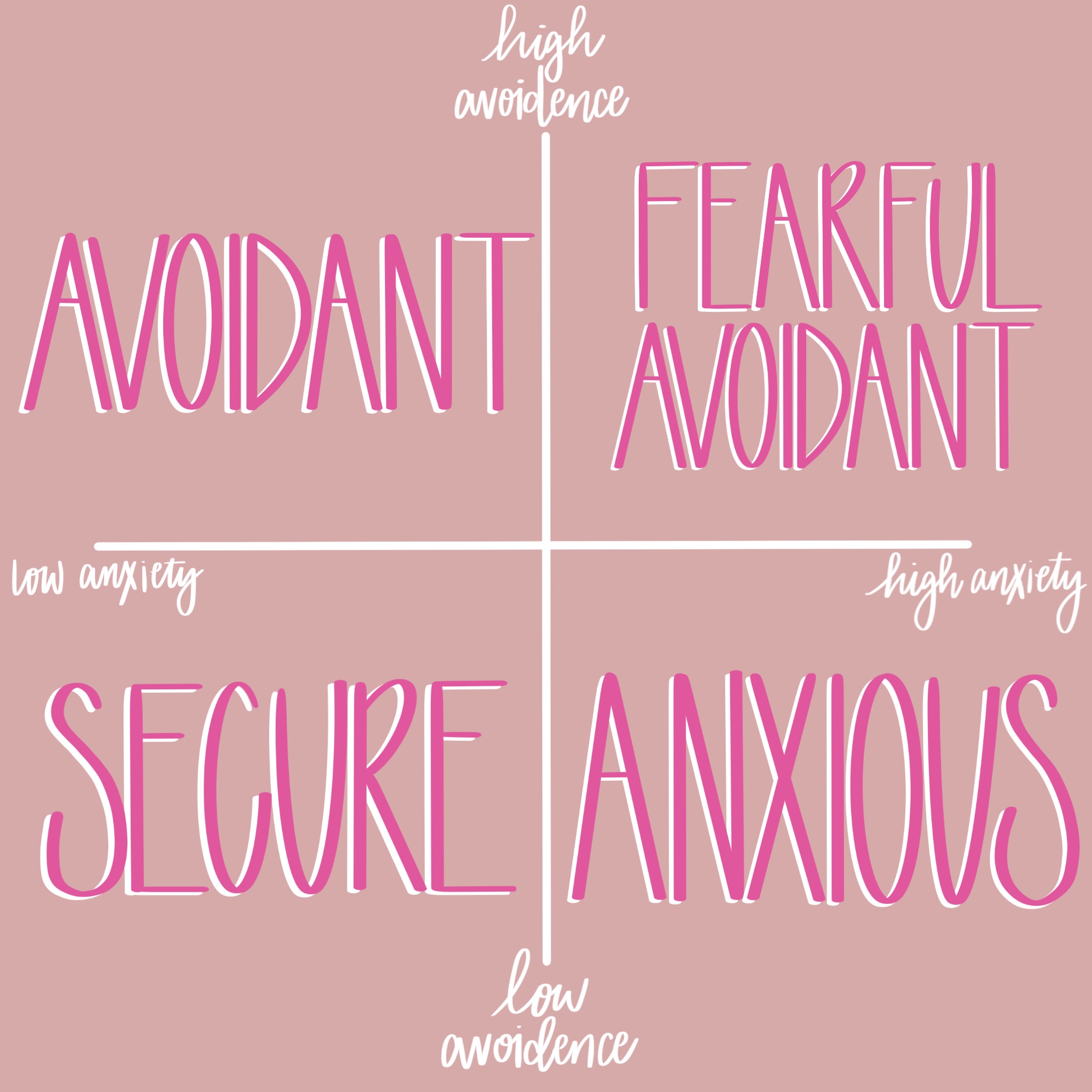
The Avoidant Attachment Style
The root of the avoidant attachment style is the fear of fully submitting themselves to intimacy in a relationship. They feel insecure about trusting others and can come across as dismissive and unengaged. They will often retreat and act like they “don’t care” to protect themselves from getting hurt (which, in turn, hurts them). Folks who have avoidant attachment typically don’t want deep and intimate relationships very much. They may have a lot of friends, but pull away when things start to feel more emotionally intimate.
The Anxious Attachment Style
The anxious attachment style stems from a deep fear of abandonment. This attachment style can come off as needy or clingy in certain situations where they are scraping for affection and reassurance. It stems from the feeling that their partner can’t truly care for them, so they always need reassurance that they are wanted. They’re sensitive and very attuned to their partners’ needs but are often insecure and anxious about their own worth in a relationship. If their needs aren’t being fully met, they might blame themselves. Additionally, adults with anxious attachment need constant reassurance that they are loved, worthy, and good enough. Finally, the intense fear of abandonment might often cause anxious adults to be intensely jealous or suspicious of their partners.
The Fearful-Avoidant (or Disorganized) Attachment Style
The Attachment Project describes this type as “the most difficult type of insecure attachment… often seen in people who have been physically, verbally, or sexually abused in their childhood. [It] develops when the child’s caregivers – the only source of safety – become a source of fear. In adulthood, this can look chaotic, as someone who seems a bit unstable and generally lacks a logical approach to most of their relationships, but desperately wants to belong. They want to love and be loved. And, they’re afraid to let anyone in. Because of the childhood wound, they have an intense fear that the people who are closest to them will hurt them. The main difference between disorganized adults and avoidant adults is that the latter want relationships.
The Secure Attachment Style
The secure attachment style is where each relationship longs to end up! Dr. Diane Poole Heller, an expert in attachment styles, says that “secure attachment is the ideal attachment style needed to enjoy healthy boundaries, fluidity of intimacy, individuation, and social engagement.” When we have had time to get to know our partners, trust them, and create a safe place, we begin to exist in a secure relationship where we are not constantly triggering one another. When we can accept that each other’s differences, attachment styles, and needs are different from our own, we create a space of love— then security begins to form! Mind you, this doesn’t mean the relationship is perfect— it means there is awareness, understanding, and communication.
How To Figure Out Your Attachment Style? Here’s a Quiz!
If you aren’t sure which attachment style you may be, we made a short quiz to help you figure it out, using this excellent article from BetterHelp! Even if it feels uncomfortable, I urge you to answer honestly! There are no right or wrong answers—only helpful ones that will lead to a better understanding of YOU. Which then leads to happier, healthier relationships, too!
*Also, a little reminder that this is for educational purposes ONLY and does not replace the work done through licensed therapeutic means. If this quiz causes you to distress in any way, we highly recommend seeking out a therapist who can help you work through this– particularly as a lot of these attachment styles can be a result of trauma.*
Quiz
- I feel confident that my partner will be there for me when I need them.
- Yes
- No
- I feel like I need to work to keep my partner, and if I don’t, they will become disinterested.
- Yes
- No
- I find myself often attracted to people who end up being manipulative, neglectful, or even abusive.
- Yes
- No
- I often feel worried or anxious that my partner doesn’t actually love me as much as I love them and may leave me in the future.
- Yes
- No
- Starting a relationship feels like taking a chance and will lead to feeling hurt, so I tend to save myself the trouble and avoid them altogether.
- Yes
- No
- I feel relaxed and comfortable in my relationship(s)
- Yes
- No
- I desperately want a relationship, but as soon as I start to like someone and get close to them, I tend to get spooked & push them away or disconnect myself from them.
- Yes
- No
- I would rather spend time alone, following my own, self-reliant pursuits than spending quality, intimate time with others.
- Yes
- No
- I can be independent within my relationship while still enjoying, consensually relying on my partner(s) in some ways.
- Yes
- No
- Whenever I’m in a relationship, no matter how much I like the individual, I often experience intense feelings and have the urge to run.
- Yes
- No
- I often feel that emotional intimacy and being in a relationship isn’t a vital part of life.
- Yes
- No
- I often seek reassurance from my partner(s) that they do indeed love me & want to spend time with me even if they’ve already expressed their interest.
- Yes
- No
Results
- If you answered Yes to questions 1, 6, & 9– You most likely have a Secure Attachment Style
- If you answered Yes to questions 2, 4, & 12– You most likely have an Anxious Attachment Style
- If you answered Yes to questions 5, 8, & 11– You most likely have an Avoidant Attachment Style
- If you answered Yes to questions 3, 7, & 10– You most likely have a Fearful-Avoidant Attachment Style
Now, if any of your results are tied—that’s okay! Like anything in life, this quiz isn’t perfect, and sometimes, when we’re working through our emotions, trauma, and lives in general, feelings start to shift and overlap. The important thing is knowing which styles you tend to lean toward and being mindful of them as you navigate the relationships in your life.
Why Is It Important to Figure Out Your Attachment Style?
Like most things in life, our attachment style generally develops from our childhood relationships with our parents and how we felt cared for (or not) as a child. They form from watching the adults in our lives commingle and respond to us as children, so know that however you respond is okay. It’s either learned or a deep-rooted survival mechanism.

I’m going to help provide you with tools to start your healing journey and work towards security—this work is messy, but what isn’t messy in this life?
Knowing your attachment style feels like a giant answer to the most confusing questions about ourselves. For example, if you have an anxious attachment style and always drive partners away by not demanding too much from them, learning why you inherently feel that way can help relieve a lot of shame. And I mean a LOT.
Understanding that it may be stemming from a fear of abandonment gives you the knowledge to focus on better coping mechanisms and communication tools instead of feeling like you are “the problem” in all your relationships. Remember, knowledge is power.
Suppose you are someone with an avoidant attachment style and constantly running away from intimacy. In that case, it’s helpful to understand why you do that so you can voice to partners, “I am feeling the urge to run away from this conversation right now, can you be patient with me while I process these emotions?”
Knowing why we react the way we do lets us nurture our inner child (even if we didn’t know that’s what we were doing) by letting ourselves feel but also asking for what we need in a relationship in a respectful, secure way.
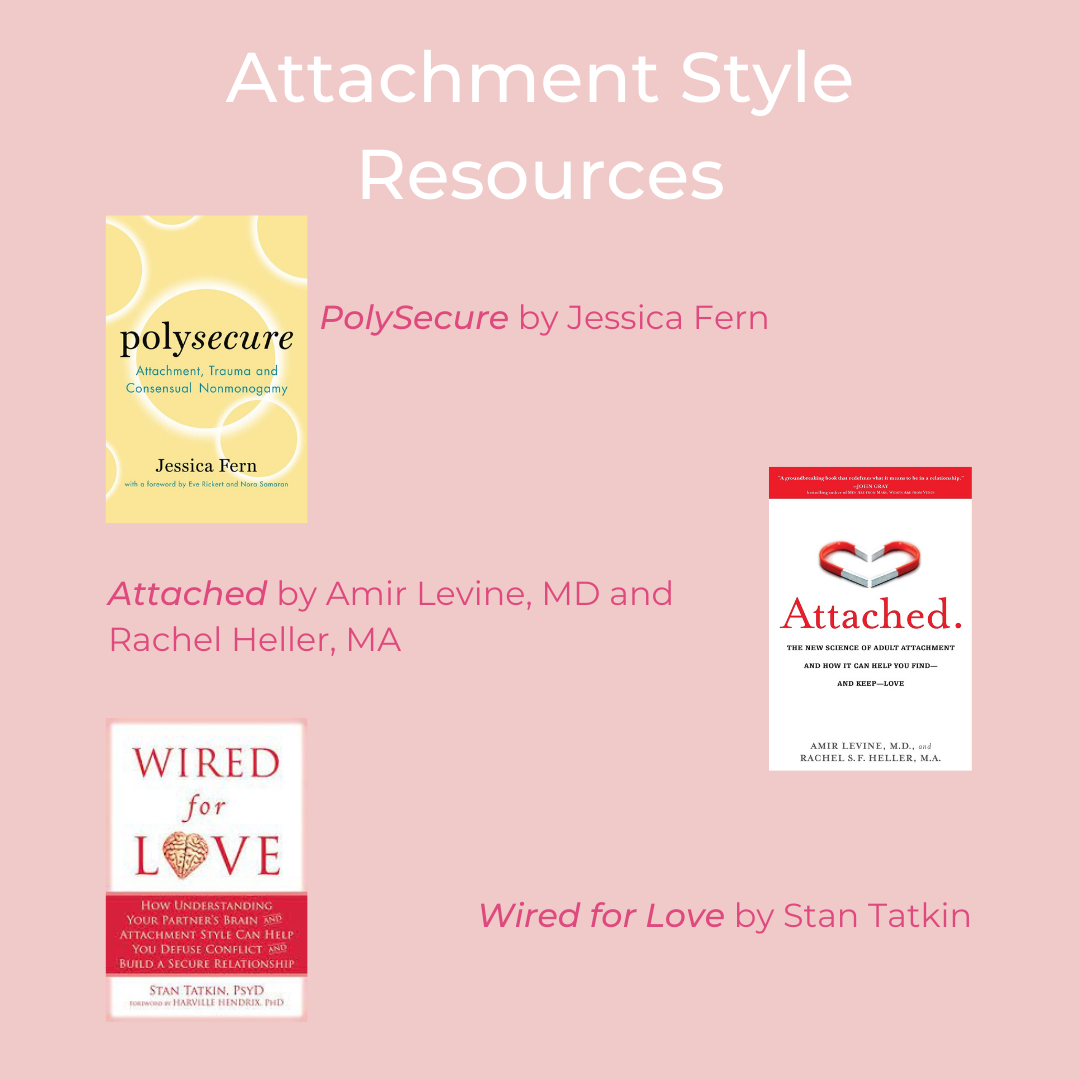
To continue learning more about attachment styles, Team RW recommends these resources:
Fill out this form to get paired with a clinician or coach on Team RW
BOOKS:
PolySecure by Jessica Fern – a book about attachment styles and relationship designs
Attached by Amir Levine, MD and Rachel Heller, MA
Wired for Love by Stan Tatkin
The Power of Attachment: How to Create Deep and Lasting Intimate Relationships by Diane Heller
The Attachment Theory Workbook: Powerful Tools to Promote Understanding, Increase Stability, and Build Lasting Relationships by Annie Chen
Attachment Theory: A Guide to Strengthening the Relationships in Your Life by Thais Gibson

If you want more writing like this, you can browse my posts on mental health, sex, education and relationships.
Related support
If this article brought up something you want support with, these pages may be a helpful next step.
Want help applying this to your real life?
If this brought something up for you, you do not have to sort through it alone. Explore therapy, coaching, workshops, and learning options built around direct, inclusive, shame-free support.